Human Rights, Equality and Freedom in Argentina
https://www.humantruth.info/argentina_human_rights_and_freedom.html
By Vexen Crabtree 2018
| Argentina Argentine Republic [Country Profile Page] | 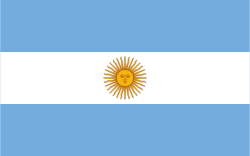 |
|---|---|
| Status | Independent State |
| Social and Moral Index | 50th best |
| Location | South America, The Americas |
| Population | 44.4m1 |
| Life Expectancy | 75.39yrs (2017)2 |
Argentina performs very well in ensuring human rights and freedom compared to most other countries. Argentina performs the best when it comes to its nominal commitment to Human Rights3. It comes in the best 20 for LGBT equality in the 2020s4 (it was the first Latin American country to legalize same-sex marriage12). It does better than average for the rate of gender bias (from 7 indicators)5 (amongst the best in The Americas), its success in fighting anti-semitic prejudice6, commentary in Human Rights Watch reports7 (but bad for The Americas), its average Freedom in the World rating, combatting modern slavery8, freethought9, opposing gender inequality10 and in supporting press freedom11. Specific long-term issues include police abuse, violence against women and inconsistent freedom accessing reproductive services12.
- Argentina's Human Rights, Equality & Tolerance
- Human Rights & Tolerance Datasets
- Gender Equality Datasets
- Prejudice Datasets
- Links
1. Argentina's Human Rights, Equality & Tolerance
#argentina #equality #freedom #gender_equality #human_rights #morals #politics #prejudice #tolerance #venezuela
| Compared to The Americas (2025)13 | ||
|---|---|---|
| Pos. | Lower is better Avg Rank13 | |
| 1 | Canada | 17.0 |
| 2 | Uruguay | 30.8 |
| 3 | Costa Rica | 38.8 |
| 4 | USA | 48.3 |
| 5 | Argentina | 48.4 |
| 6 | Brazil | 53.1 |
| 7 | Chile | 61.4 |
| 8 | Bolivia | 65.3 |
| 9 | Mexico | 66.3 |
| 10 | Peru | 68.4 |
| 11 | Trinidad & Tobago | 68.9 |
| 12 | Bahamas | 70.3 |
| 13 | El Salvador | 70.3 |
| The Americas Avg | 75.88 | |
| q=35. | ||
| Human Rights, Equality & Tolerance (2025)13 | ||
|---|---|---|
| Pos. | Lower is better Avg Rank13 | |
| 1 | Sweden | 7.5 |
| 2 | Netherlands | 8.6 |
| 3 | Denmark | 9.0 |
| ... | ||
| 30 | Slovakia | 47.1 |
| 31 | Poland | 47.8 |
| 32 | USA | 48.3 |
| 33 | Argentina | 48.4 |
| 34 | Cyprus | 49.2 |
| 35 | Andorra | 50.2 |
| 36 | Lithuania | 51.1 |
| 37 | Greece | 51.4 |
| World Avg | 90.04 | |
| q=198. | ||
The best countries in the world at ensuring human rights, fostering equality and promoting tolerance, are Sweden, The Netherlands and Denmark14. These countries are displaying the best traits that humanity has to offer. The worst countries are Somalia, Eritrea and Saudi Arabia14.
30 datasets are used to calculate points for each country, including multiple decades of data on supporting press freedom, combatting modern slavery, its average Freedom in the World rating, commentary in Human Rights Watch reports, its nominal commitment to Human Rights, speed of uptake of HR treaties, opposing gender inequality, the rate of gender bias (from 7 indicators), the year from which women could participate in democracy, its success in fighting anti-semitic prejudice, LGBT equality and freethought. The regions with the best average results per country are Scandinavia, Baltic States and Europe14, whereas the worst are The Middle East, Africa and Asia14.
For more, see:
Amnesty International's 2023-23 summary on human rights in Argentina stated:
“Impunity for gender-based violence persisted with many femicides and attacks against LGBTI people going unpunished. Abortion remained difficult to access in many parts of the country, despite its recent decriminalization. Investigations into several key cases of disappearances and deaths in police custody did not progress. Officials did not take measures to improve the integration of refugees and asylum seekers.”
"The State of the World's Human Rights 2022/23" by Amnesty International (2023)15
“Long-standing human rights problems in Argentina include police abuse, poor prison conditions, endemic violence against women, restrictions on abortion, difficulty accessing reproductive services, and obstacles keeping indigenous people from enjoying the rights that Argentine and international law afford them. [...] Police abuse remains a serious problem. Security forces occasionally employ excessive force against protesters, despite a 2011 commitment by authorities in at least 19 of Argentina's 23 provinces to ensure that force is used proportionately. [...]
Indigenous people in Argentina face obstacles in accessing justice, land, education, health care, and basic services. Argentina has failed to implement existing laws to protect indigenous peoples' right to free, prior, and informed consent when the government adopts decisions that may affect their rights-a right provided for in international law.”
"World Report 2018" by Human Rights Watch (2018)12
But it's not all bad.:
“In 2017, Argentina created a federal agency to ensure access to official information. Argentina continues to make significant progress [with] prosecuting officials for abuses committed during the country's last military dictatorship (1976-1983), although trials have been delayed. Argentina continues to make significant progress protecting lesbian, gay, bisexual, and transgender (LGBT) rights.”
"World Report 2018" by Human Rights Watch (2018)12
Along with 11 others, Argentina signed the Lima Declaration in 2017, condemning "the assault on democratic order and the systematic violation of human rights in Venezuela"16.
2. Human Rights & Tolerance Datasets
2.1. Press Freedom
#democracy #freedom #Freedom_of_Speech #Good_Governance #mass_media #politics #UK
| Press Freedom Higher is better11 | ||
|---|---|---|
| Pos. | 202511 | |
| 1 | Norway | 92.31 |
| 2 | Estonia | 89.46 |
| 3 | Netherlands | 88.64 |
| ... | ||
| 83 | Paraguay | 56.84 |
| 84 | Thailand | 56.72 |
| 85 | Bosnia & Herzegovina | 56.33 |
| 86 | Argentina | 56.14 |
| 87 | Malaysia | 56.09 |
| 88 | Greece | 55.37 |
| 89 | Nepal | 55.20 |
| 90 | Northern Cyprus | 54.84 |
| The Americas Avg | 55.99 | |
| World Avg | 54.65 | |
| q=179. Also scored for 2000s-2010s. | ||
The freedom to investigate, publish information, and have access to others' opinion is a fundamental part of today's information-driven world, and is linked with Freedom of Speech and Good Governance. Scores on the Press Freedom Index are calculated according to indicators including pluralism - the degree to which opinions are represented in the media, media independence of authorities, self-censorship, legislation, transparency and the infrastructure that supports news and information, and, the level of violence against journalists which includes lengths of imprisonments. The index "does not take direct account of the kind of political system but it is clear that democracies provide better protection for the freedom to produce and circulate accurate news and information than countries where human rights are flouted". The rankings are used as one of the datasets of the Social and Moral Development Index17
It must be noted that press freedom is not an indicator of press quality and the press itself can be abusive; the UK suffers in particular from a popular brand of nasty reporting that infuses several of its newspapers who are particularly prone to running destructive and often untrue campaigns against victims. The Press Freedom Index notes that "the index should in no way be taken as an indicator of the quality of the media in the countries concerned".
For more, see:
- "Human Rights" by Vexen Crabtree (2026).
Averages by decade for Argentina (for the ranks, lower is better):
| Press Freedom | 2000s Average | 2010s Average |
|---|---|---|
| Argentina: | 16.21 | 74.06 |
| World Rank: | 67th | ⇡ 55th |
| World Avg: | 27.44 | 65.91 |
2.2. Slavery in the 2020s
#burundi #eritrea #human_rights #indonesia #slavery
| Slavery in the 2020s Lower is better8 | ||
|---|---|---|
| Pos. | Slavery in the 2020s Per 10008 | |
| 1= | Switzerland | 0.50 |
| 1= | Norway | 0.50 |
| 3= | Germany | 0.60 |
| ... | ||
| 55= | Estonia | 4.10 |
| 56= | Uganda | 4.20 |
| 56= | Guyana | 4.20 |
| 56= | Argentina | 4.20 |
| 56= | Czechia | 4.20 |
| 60= | Egypt | 4.30 |
| 60= | Rwanda | 4.30 |
| 62 | Slovenia | 4.40 |
| The Americas Avg | 5.84 | |
| World Avg | 7.15 | |
| q=160. Also scored for 2010s-2020s. | ||
Modern slavery includes forced labour (often of the under-age), debt bondage (especially generational), sexual slavery, chattel slavery and other forms of abuse, some of which can be surprisingly difficult to detect, but often target those fleeing from warzones, and the poverty-stricken vulnerable.18. Some industries (diamond, clothing, coal) from some countries (Burundi19, Eritrea19, Indonesia20) are a particular concern. The Walk Free Foundation, say in their 2023 report, that 50 million people are living in modern slavery19, and, nearly two-thirds of those in forced labour are employed at the end of supply chains working for large multinationals that creating products consumed by rich countries21.
For more, see:
Averages by decade for Argentina (for the ranks, lower is better):
| Slavery | 2010s Average | 2020s Average |
|---|---|---|
| Argentina: | 1.30 | 4.20 |
| World Rank: | 9th | ⇣ 56th |
| World Avg: | 6.54 | 7.15 |
2.3. Freedom in the World
#freedom #human_rights #hungary #politics #USA
| Freedom in the World Lower is better | ||
|---|---|---|
| Pos. | 2024 Score | |
| 1= | Norway | 1.0 |
| 1= | Canada | 1.0 |
| 1= | Cape Verde | 1.0 |
| ... | ||
| 52= | Guyana | 2.0 |
| 52= | USA | 2.0 |
| 52= | Mauritius | 2.0 |
| 52= | Argentina | 2.0 |
| 52= | Greece | 2.0 |
| 52= | Antigua & Barbuda | 2.0 |
| 52= | Sao Tome & Principe | 2.0 |
| 52= | Suriname | 2.0 |
| The Americas Avg | 2.7 | |
| World Avg | 3.7 | |
| q=205. Also scored for 1970s-2010s. | ||
Freedom House's long-standing annual report has been running since the 1970s, collecting data on political rights (PR) and civil liberties (CL). Their reports rate countries as "Free", "Partially Free" or "Not Free", however the results here are based on their numerical values. Many countries score the best combination of scores (1 and 1), which is why the table of results show many places equally placed in 1st place. In the past two decades, some well-established democracies like the USA and Hungary have been falling. Whilst most of the world in general is improving rights and freedoms over time, the 2020s has seen some regression.
For more, see:
Averages by decade for Argentina (for the ranks, lower is better):
| Freedom in the World | 1970s Average | 1980s Average | 1990s Average | 2000s Average | 2010s Average |
|---|---|---|---|---|---|
| Argentina: | 4.4 | 2.7 | 2.5 | 2.2 | 2.0 |
| World Rank: | 71st | ⇡ 51st | ⇣ 68th | ⇣ 76th | ⇡ 64th |
| World Avg: | 4.3 | 4.2 | 3.6 | 3.4 | 3.4 |
2.4. Human Rights Watch Comments
| Human Rights Watch Comments Higher is better7 | ||
|---|---|---|
| Pos. | 2017 Score7 | |
| 1= | UK | 9 |
| 1= | France | 9 |
| 1= | Germany | 9 |
| ... | ||
| 48= | Peru | -1 |
| 49= | Mozambique | -2 |
| 49= | Brazil | -2 |
| 49= | Argentina | -2 |
| 49= | Georgia | -2 |
| 49= | Turkey | -2 |
| 49= | Tunisia | -2 |
| 49= | Mexico | -2 |
| The Americas Avg | -0.8 | |
| World Avg | -1.9 | |
| q=123. | ||
Human Rights Watch comments concentrate mostly on negative issues, however, they also make positive comments for those countries that engage in human rights defence around the world, or who make improvements at home. By adding up positive and negative comments (including double-points for negatives that involve large scales and crimes against humanity), the Social and Moral Index turns HRW commentary into quantified values. Some countries may be unfairly penalized because HRW have not examined them, and, some countries "get away" with abuses if they manage to hide it, or if it goes unnoticed - a negative point has been given for those countries in which HRW specifically state that access to investigators has been barred. The points were limited to a minimum of -10 because there are some points at which things are so bad, with abuses affecting so many, it is difficult to be more specific about the depths of the issues.
For more, see:
- "Human Rights" by Vexen Crabtree (2026).
2.5. Nominal Commitment to HR
| Nominal Commitment to HR Higher is better3 | ||
|---|---|---|
| Pos. | 2009 Treaties3 | |
| 1 | Argentina | 24 |
| 2= | Chile | 23 |
| 2= | Costa Rica | 23 |
| 2= | Ecuador | 23 |
| 2= | Germany | 23 |
| 2= | Mexico | 23 |
| 2= | Peru | 23 |
| 2= | Spain | 23 |
| 2= | Slovenia | 23 |
| 2= | Paraguay | 23 |
| 2= | Serbia | 23 |
| 2= | Sweden | 23 |
| The Americas Avg | 16.5 | |
| World Avg | 15.1 | |
| q=194. | ||
There are many international agreements on Human Rights, and, many mechanisms by which countries can be brought to account for their actions. Together, these have been the biggest historical movement in the fight against oppression and inhumanity. Or, putting it another way: these are rejected mostly by those who wish to oppress inhumanely. None of them are perfect and many people object to various components and wordings, but, no-one has come up with, and enforced, better methods of controlling the occasional desires that states and peoples have of causing angst for other states and peoples in a violent, unjust or inhumane way. Points are awarded for the number of Human Rights agreements ratified by the country, plus the acceptance of the petition mechanisms for disputes. The maximum possible score in 2009 was 24.
For more, see:
- "Human Rights" by Vexen Crabtree (2026).
2.6. HR Treaties Lag
#human_rights #international_law #micronesia #politics #small_islands
| HR Treaties Lag Lower is better22 | ||
|---|---|---|
| Pos. | 2019 Avg Yrs/Treaty22 | |
| 1 | Ecuador | 2.15 |
| 2 | Uruguay | 2.25 |
| 3 | Tunisia | 3.65 |
| ... | ||
| 28 | Belarus | 5.71 |
| 29 | Canada | 5.73 |
| 30 | Cyprus | 5.81 |
| 31 | Argentina | 5.90 |
| 32 | Hungary | 5.91 |
| 33 | Mongolia | 6.26 |
| 34 | Poland | 6.34 |
| 35 | Cape Verde | 6.40 |
| The Americas Avg | 8.45 | |
| World Avg | 10.02 | |
| q=195. | ||
Human Rights (HR) Treaties Lag is a count of how long it took each country to sign each of 11 key HR treaties. From the date of the first signatory of each treaty, all other countries have one point added to their score for each day they delayed in signing. Results are presented as average time in years to sign each one. The lower a country's score, the more enthusiastically it has taken on international Human Rights Treaties - which are, of course, minimal standards of good governance. The slowest are the countries of Micronesia, Melanesia, Australasia and Polynesia all lagged by over 12 years per treaty. The best regions are The Americas, Scandinavia and the Mediterranean.
For more, see:
3. Gender Equality Datasets
Argentina is on the way towards ending gender inequality but women are still in an unfavourable position much of the time.
See:
"Abortion is illegal in Argentina, except in cases of rape or when the life of the woman is at risk. But even in such cases, women and girls are sometimes subject to criminal prosecution for seeking abortions, and have trouble accessing reproductive services, such as contraception and voluntary sterilization"12.
3.1. Gender Inequality
#gender #gender_equality #human_rights #misogyny #women
| Gender Inequality Lower is better10 | ||
|---|---|---|
| Pos. | 202210 | |
| 1 | Denmark | 0.01 |
| 2 | Norway | 0.01 |
| 3 | Switzerland | 0.02 |
| ... | ||
| 68= | Brunei | 0.28 |
| 68= | Georgia | 0.28 |
| 70 | Barbados | 0.29 |
| 71 | Argentina | 0.30 |
| 72 | Mongolia | 0.30 |
| 73 | Cuba | 0.30 |
| 74 | Thailand | 0.31 |
| 75 | Bhutan | 0.33 |
| The Americas Avg | 0.36 | |
| World Avg | 0.34 | |
| q=166. Also scored for 1990s-2010s. | ||
The UN Human Development Reports include statistics on gender equality which take into account things like maternal mortality, access to political power (seats in parliament) and differences between male and female education rates. Gender inequality is not a necessary part of early human development. Although a separation of roles is almost universal due to different strengths between the genders, this does not have to mean that women are subdued, and, such patriarchalism is not universal in ancient history. Those cultures and peoples who shed, or never developed, the idea that mankind ought to dominate womankind, are better cultures and peoples than those who, even today, cling violently to those mores.
For more, see:
Averages by decade for Argentina (for the ranks, lower is better):
| Gender Inequality | 1990s Average | 2000s Average | 2010s Average |
|---|---|---|---|
| Argentina: | 0.44 | 0.39 | 0.34 |
| World Rank: | 52nd | ⇣ 66th | ⇣ 69th |
| World Avg: | 0.44 | 0.41 | 0.37 |
3.2. Gender Biases
#gender #gender_equality #prejudice #women
| Gender Biases Lower is better5 | ||
|---|---|---|
| Pos. | 2022 %5 | |
| 1 | Sweden | 31.823 |
| 2 | New Zealand | 34.424 |
| 3 | Australia | 37.024 |
| ... | ||
| 17 | Italy | 64.425 |
| 18 | Greece | 64.924 |
| 19 | Hungary | 67.325 |
| 20 | Argentina | 74.324 |
| 21 | Serbia | 77.624 |
| 22 | Singapore | 77.624 |
| 23 | Bulgaria | 78.225 |
| 24 | Estonia | 78.323 |
| The Americas Avg | 82.90 | |
| World Avg | 83.93 | |
| q=88. | ||
The Gender Social Norms Index (GSNI) looks at gender biases across seven criteria; the % given here is for the total people who are biased across any of those criteria. By subtracting the value from 100%, you can see that those who do well on this index, you are seeing a count of those who do not appear to be biased against women in any of the criteria, and so, doing well on this index is a very positive sign for any country.
The data was included in UN (2022) with full results in Annex table AS6.7.1; their data stems for ranges between 2005 and 2022, depending on the country in question.
3.3. Year Women Can Vote
#christianity #gender_equality #human_rights #politics #women
| Year Women Can Vote Lower is better | ||
|---|---|---|
| Pos. | Year Women Can Vote Year | |
| 1 | New Zealand | 1893 |
| 2 | Australia | 1902 |
| 3 | Finland | 1906 |
| ... | ||
| 68= | Singapore | 1947 |
| 68= | Pakistan | 1947 |
| 68= | Malta | 1947 |
| 68= | Argentina | 1947 |
| 72= | S. Korea | 1948 |
| 72= | Israel | 1948 |
| 72= | Belgium | 1948 |
| 72= | Niger | 1948 |
| The Americas Avg | 1947 | |
| World Avg | 1930 | |
| q=189. | ||
Women now have equal rights in the vast majority of countries across the world. Although academic literature oftens talks of when a country "grants women the right to vote", this enforces a backwards way of thinking. Women always had the right to vote, however, they were frequently denied that right. The opposition to women's ability to vote in equality with man was most consistently and powerfully opposed by the Catholic Church, other Christian organisations, Islamic authorities and some other religious and secular traditionalists.
For more, see:
4. Prejudice Datasets
4.1. Anti-Semite Opinions
#antisemitism #christianity #germany #indonesia #jordan #judaism #laos #morocco #netherlands #pakistan #philippines #religion #religious_violence #saudi_arabia #spain #sweden #turkey #UK #vietnam
| Anti-Semite Opinions Lower is better6 | ||
|---|---|---|
| Pos. | 2014 %6 | |
| 1 | Laos | 0 |
| 2 | Philippines | 3 |
| 3 | Sweden | 4 |
| ... | ||
| 30= | Estonia | 22 |
| 31 | Japan | 23 |
| 32= | Trinidad & Tobago | 24 |
| 32= | Argentina | 24 |
| 32= | Mexico | 24 |
| 35= | Haiti | 26 |
| 35= | Mongolia | 26 |
| 35= | Switzerland | 26 |
| The Americas Avg | 29.7 | |
| World Avg | 36.8 | |
| q=101. | ||
Anti-Semitism is the word given to irrational racism against Jews. It's not the same as anti-Judaism (arguments against the religion) nor the same as anti-Zionism (arguments against Israel). In history, influential Christian theologians concocted the arguments against Jews that led, very early on, to widespread Christian action against Jews26,27,28,29. As Christianity rose to power in the West and presided over the Dark Ages, there were repeated violent outbursts against Jews of the most horrible kind. Entire Crusades were aimed at them and the feared Spanish Inquisition paid Jews particular attention. The horror of the holocaust instigated by German Nazis in the 1940s was followed (finally) by the era of European human rights and a movement against racism in general.
The places that are the least anti-Semitical are a few countries of south-east Asia (Laos, the Philippines and Vietnam) and some of the secular liberal democracies of Europe (Sweden, the Netherlands and the UK). The worst countries for antisemitism are Islamic states of the Middle East30, which are undergoing their own Dark Age. Saudi Arabia, Jordan, Morocco, Indonesia, Pakistan and Turkey see the most oppressive and violent actions towards Jews31,32. Jews in Muslim countries face a host of restrictions and "ceaseless humiliation and regular pogroms"33. In 2004 the European Union Monitoring Center on Racism and Xenophobia reported on violent anti-Jew crimes in the EU and found that that largest group of perpetrators were young Muslim males34.
For more, see:
4.2. LGBT Equality in the 2020s
#2020s #argentina #equality #homosexuality #human_rights #ICCPR #intolerance #sexuality #tolerance
| LGBT Equality in the 2020s Higher is better4 | ||
|---|---|---|
| Pos. | LGBT Equality in the 2020s Score4 | |
| 1= | Germany | 4.88 |
| 1= | Spain | 4.88 |
| 3 | Portugal | 4.81 |
| 4 | Brazil | 4.80 |
| 5 | France | 4.76 |
| 6 | Norway | 4.73 |
| 7= | Netherlands | 4.72 |
| 7= | Argentina | 4.72 |
| 9 | USA | 4.68 |
| 10= | UK | 4.66 |
| 10= | Luxembourg | 4.66 |
| 12 | Mexico | 4.35 |
| The Americas Avg | 0.41 | |
| World Avg | -1.21 | |
| q=215. Also scored for 1970s-2020s. | ||
Discrimination against Lesbian, Gay, Bisexual and Transgender (LGBT) folk is rife across the world. Legal restrictions co-exist alongside social stigmatisation and physical violence35. LGBT tolerance and equal rights have been fought for country-by-country against tightly entrenched cultural and religious opposition. Adult consensual sexual activity is a Human Right and protected by privacy laws36. Despite this, it is illegal to be homosexual in over 60 countries (as of 2025)37. The Vexen LGBT Equality Index as part of the Social and Moral Development Index grants points to each country depending on its LGBT stance since the 1970s38,39. Europe is by far the least prejudiced region, but in the Middle East and Africa cultural prejudice goes hand-in-hand with state intolerance, all too often including physical violence.
For more, see:
In 1887, Argentina's new Penal Code removed anti-male-homosexuality sodomy provisions imposed by the Spanish. It was then the first Latin American country to legalize same-sex marriage, in 2010. The 2010 changes were enacted by President Cristina Fernandez de Kirchner despite "vigorous opposition from the Catholic Church and evangelical Protestant churches"40.ILGA researchers in 2017 found that Argentina had legal protections against anti-LGBT hate crime, and other protections.
“In 2010, Argentina became the first Latin American country to legalize same-sex marriage. The Civil Marriage Law allows same-sex couples to enter civil marriages and affords them the same legal marital protections as opposite-sex couples, including adoption rights and pension benefits. Since 2010, local groups report, more than 16,200 same-sex couples have married nationwide. ... Argentina continues to make significant progress protecting lesbian, gay, bisexual, and transgender (LGBT) rights.”
"World Report 2018" by Human Rights Watch (2018)12
Actions taken at the United Nations:
- ⇡ Supported the 2006 Norway Joint Statement on sexual orientation and gender identity at the UN.
- ⇡ Supported the 2008 Declaration at the UN General Assemly affirming LGBTQ rights, tabled by Argentina.
- ⇡ Voted in favour of the 2011 Resolution at the UN Human Rights Council posted by South Africa, requesting a report on discrimination and violence against LGBTQ folk.
- ⇡ In 2025, signed the UN Human Rights Council Joint statement on ending acts of violence and human rights violations based on sexual orientation and gender identity.
- ⇡ Voted in favour of the 2014 Resolution 27/32 at the UN Human Rights Council against discrimiantion based on sexual orientation and gender identity.
- ⇡ In 2019, voted to renew the UN Human Rights Council Independent Expert on discrimination based on sexual orientation and gender identity.
- ⇡ In 2022, voted to renew the UN Human Rights Council Independent Expert on discrimination based on sexual orientation and gender identity.
- ⇡ In 2025, voted to renew the UN Human Rights Council Independent Expert on discrimination based on sexual orientation and gender identity.
Averages by decade for Argentina (for the ranks, lower is better):
| LGBT Equality | 1970s Average | 1980s Average | 1990s Average | 2000s Average | 2010s Average | 2020s Average |
|---|---|---|---|---|---|---|
| Argentina: | 0.00 | 0.00 | 0.05 | 2.55 | 6.60 | 4.72 |
| World Rank: | 34th | ⇣ 42nd | ⇣ 51st | ⇡ 36th | ⇡ 6th | ⇣ 7th |
| World Avg: | -2.98 | -2.87 | -2.60 | -2.15 | -1.10 | -1.21 |
4.3. Freedom of Thought
#europe #freedom_of_belief #freethought #human_rights #netherlands #religion #religious_tolerance #secularism #the_enlightenment
| Freedom of Thought Lower is better9 | ||
|---|---|---|
| Pos. | 20219 | |
| 1= | Belgium | 1.0 |
| 1= | Taiwan | 1.0 |
| 1= | Netherlands | 1.0 |
| ... | ||
| 80= | Mauritius | 2.8 |
| 80= | Gambia | 2.8 |
| 80= | Montenegro | 2.8 |
| 80= | Argentina | 2.8 |
| 80= | UK | 2.8 |
| 80= | Malta | 2.8 |
| 80= | Denmark | 2.8 |
| 80= | Venezuela | 2.8 |
| The Americas Avg | 2.7 | |
| World Avg | 3.0 | |
| q=196. | ||
Freedom of Religion and Freedom of Belief are upheld in Article 18 the United Nation's Universal Declaration of Human Rights41. It affirms that it is a basic human right that all people are free to change their beliefs and religion as they wish42. No countries voted against this (although eight abstained). This right was first recognized clearly in the policies of religious toleration of the Netherlands and elsewhere in Europe in the post-enlightenment era43 of the 19th century. In democratic countries, freedom of belief and religion is now taken for granted44. In 2016 a study found that over 180 countries in the world had come to guarantee freedom of religion and belief45. The best countries at doing so are Belgium, The Netherlands and Taiwan9,46 and the worst: Afghanistan, N. Korea, Pakistan and Saudi Arabia9,47.
Long-term studies have shown that religious violence and persecution both decrease in cultures where religious freedom is guaranteed48. Despite this, there still are many who are strongly against freedom of belief42, including entire cultures and many individual communities of religious believers. Their alternative is that you are not free to believe what you want and they often state that you cannot change religion without being punished (often including the death penalty): this is bemoaned as one of the most dangerous elements of religion49 and "the denial of religious freedoms is inevitably intertwined with the denial of other freedoms"50 and the solution is, everywhere, to allow religious freedom and the freedom of belief.
For more, see: