Human Rights and Freedom in South Sudan
https://www.humantruth.info/south_sudan_human_rights_and_freedom.html
By Vexen Crabtree 2019
#freethought #religious_tolerance #south_sudan #south_sudan_freethought
| South Sudan Republic of South Sudan [Country Profile Page] | 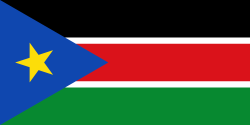 |
|---|---|
| Status | Independent State |
| Social and Moral Index | 198th best |
| Location | Africa |
| Population | 11.0m1 |
| Life Expectancy | 54.98yrs (2017)2 |
South Sudan is very poor at ensuring human rights and freedom compared to the rest of the world, and it has cultural issues when it comes to tolerance and equality. S. Sudan does better than average when it comes to freethought3. When it comes to most other metrics, S. Sudan does not do well. It does worse than average for commentary in Human Rights Watch reports4, supporting press freedom5 and in combatting modern slavery6. And finally, it falls into the worst-performing 20 when it comes to its average Freedom in the World rating and in LGBT equality in the 2020s7. Since 2013 South Sudan´s civil war has seen atrocities and war crimes committed consistently by both sides, in some cases possibly constituting crimes against humanity8.
- South Sudan's Human Rights, Equality & Tolerance
- Human Rights & Tolerance Datasets
- Prejudice Datasets
- Links
1. South Sudan's Human Rights, Equality & Tolerance
#equality #freedom #gender_equality #human_rights #morals #politics #prejudice #south_sudan #tolerance
| Compared to Africa (2025)9 | ||
|---|---|---|
| Pos. | Lower is better Avg Rank9 | |
| 1 | Cape Verde | 65.1 |
| 2 | S. Africa | 70.5 |
| 3 | Mauritius | 76.4 |
| ... | ||
| 39 | Nigeria | 128.2 |
| 40 | Burundi | 129.6 |
| 41 | Djibouti | 129.7 |
| 42 | S. Sudan | 131.7 |
| 43 | Malawi | 132.6 |
| 44 | Libya | 135.0 |
| 45 | Guinea | 135.1 |
| 46= | Ethiopia | 136.1 |
| 47 | Cameroon | 139.8 |
| Africa Avg | 116.60 | |
| q=54. | ||
| Human Rights, Equality & Tolerance (2025)9 | ||
|---|---|---|
| Pos. | Lower is better Avg Rank9 | |
| 1 | Sweden | 7.5 |
| 2 | Netherlands | 8.6 |
| 3 | Denmark | 9.0 |
| ... | ||
| 169 | Nigeria | 128.2 |
| 170 | Burundi | 129.6 |
| 171 | Djibouti | 129.7 |
| 172 | S. Sudan | 131.7 |
| 173 | Palestine | 132.1 |
| 174 | Malawi | 132.6 |
| 175 | UAE | 134.1 |
| 176 | Libya | 135.0 |
| World Avg | 90.04 | |
| q=198. | ||
The best countries in the world at ensuring human rights, fostering equality and promoting tolerance, are Sweden, The Netherlands and Denmark10. These countries are displaying the best traits that humanity has to offer. The worst countries are Somalia, Eritrea and Saudi Arabia10.
30 datasets are used to calculate points for each country, including multiple decades of data on supporting press freedom, combatting modern slavery, its average Freedom in the World rating, commentary in Human Rights Watch reports, its nominal commitment to Human Rights, speed of uptake of HR treaties, opposing gender inequality, the rate of gender bias (from 7 indicators), the year from which women could participate in democracy, its success in fighting anti-semitic prejudice, LGBT equality and freethought. The regions with the best average results per country are Scandinavia, Baltic States and Europe10, whereas the worst are The Middle East, Africa and Asia10.
For more, see:
Amnesty International's 2023-23 summary on human rights in South Sudan stated:
“Government security forces and armed groups perpetrated serious human rights abuses, including killings, acts of sexual violence, abductions, detention, torture and other ill-treatment, the recruitment and use of children, and destruction of civilian property. At least 24 people were extrajudicially executed, including a child, by government forces. The use of conflict related sexual violence was widespread and systematic, and prosecutions of suspects for this and other crimes under international law were rare. Humanitarian access was restricted and millions of people faced acute food insecurity. The government failed to respect, protect, promote and fulfil the right to health. Rights to freedom of expression, association and peaceful assembly were violated. Death sentences were imposed, and executions carried out. There were concerns that a project to divert water would adversely affect local communities and wildlife.”
"The State of the World's Human Rights 2022/23" by Amnesty International (2023)11
“In 2017, South Sudan´s civil war entered its fourth year. [...] featuring highly abusive government counterinsurgency operations. The government continued to restrict media, suppress critics, and unlawfully detain people for perceived opposition.
Since the start of the conflict, almost 2 million people have been internally displaced, and another 2 million have sought refuge in neighboring countries, with 1 million in Uganda alone. More than 230,000 people are sheltering in six United Nations bases in towns across the country. [...]
Both sides have committed abuses that qualify as war crimes, including looting, indiscriminate attacks on civilians and the destruction of civilian property, arbitrary arrests and detention, beatings and torture, enforced disappearances, rape including gang rape, and extrajudicial executions. Some abuses may also constitute crimes against humanity.”
"World Report 2018" by Human Rights Watch (2018)8
2. Human Rights & Tolerance Datasets
2.1. Press Freedom
#democracy #freedom #Freedom_of_Speech #Good_Governance #mass_media #politics #UK
| Press Freedom Higher is better5 | ||
|---|---|---|
| Pos. | 20255 | |
| 1 | Norway | 92.31 |
| 2 | Estonia | 89.46 |
| 3 | Netherlands | 88.64 |
| ... | ||
| 105 | Zimbabwe | 52.10 |
| 106 | Lesotho | 52.07 |
| 107 | Chad | 51.89 |
| 108 | S. Sudan | 51.63 |
| 109 | Guinea-Bissau | 51.36 |
| 110 | Haiti | 51.06 |
| 111 | Israel | 51.06 |
| 112 | Madagascar | 50.80 |
| Africa Avg | 52.30 | |
| World Avg | 54.65 | |
| q=179. Also scored for 2000s-2010s. | ||
The freedom to investigate, publish information, and have access to others' opinion is a fundamental part of today's information-driven world, and is linked with Freedom of Speech and Good Governance. Scores on the Press Freedom Index are calculated according to indicators including pluralism - the degree to which opinions are represented in the media, media independence of authorities, self-censorship, legislation, transparency and the infrastructure that supports news and information, and, the level of violence against journalists which includes lengths of imprisonments. The index "does not take direct account of the kind of political system but it is clear that democracies provide better protection for the freedom to produce and circulate accurate news and information than countries where human rights are flouted". The rankings are used as one of the datasets of the Social and Moral Development Index12
It must be noted that press freedom is not an indicator of press quality and the press itself can be abusive; the UK suffers in particular from a popular brand of nasty reporting that infuses several of its newspapers who are particularly prone to running destructive and often untrue campaigns against victims. The Press Freedom Index notes that "the index should in no way be taken as an indicator of the quality of the media in the countries concerned".
For more, see:
- "Human Rights" by Vexen Crabtree (2026).
“Authorities harassed, detained, and interrogated journalists and editors. [...] South Sudanese authorities restricted international journalists from covering the conflict, including by refusing to grant them visas or accreditation, and accusing them of publishing articles critical of the government. The government blocked numerous independent online news sites.”
"World Report 2018" by Human Rights Watch (2018)8
On average throughout the 2010s, S. Sudan's rate was 57.74.
2.2. Slavery in the 2020s
#burundi #eritrea #human_rights #indonesia #slavery
| Slavery in the 2020s Lower is better6 | ||
|---|---|---|
| Pos. | Slavery in the 2020s Per 10006 | |
| 1= | Switzerland | 0.50 |
| 1= | Norway | 0.50 |
| 3= | Germany | 0.60 |
| ... | ||
| 138 | Jordan | 10.00 |
| 139 | Bosnia & Herzegovina | 10.10 |
| 140= | Papua New Guinea | 10.30 |
| 140= | S. Sudan | 10.30 |
| 142= | Azerbaijan | 10.60 |
| 142= | Pakistan | 10.60 |
| 144 | Kazakhstan | 11.10 |
| 145 | Belarus | 11.30 |
| Africa Avg | 6.90 | |
| World Avg | 7.15 | |
| q=160. Also scored for 2010s-2020s. | ||
Modern slavery includes forced labour (often of the under-age), debt bondage (especially generational), sexual slavery, chattel slavery and other forms of abuse, some of which can be surprisingly difficult to detect, but often target those fleeing from warzones, and the poverty-stricken vulnerable.13. Some industries (diamond, clothing, coal) from some countries (Burundi14, Eritrea14, Indonesia15) are a particular concern. The Walk Free Foundation, say in their 2023 report, that 50 million people are living in modern slavery14, and, nearly two-thirds of those in forced labour are employed at the end of supply chains working for large multinationals that creating products consumed by rich countries16.
For more, see:
Averages by decade for S. Sudan (for the ranks, lower is better):
| Slavery | 2010s Average | 2020s Average |
|---|---|---|
| S. Sudan: | 20.50 | 10.30 |
| World Rank: | 161st | ⇡ 140th |
| World Avg: | 6.54 | 7.15 |
2.3. Freedom in the World
#freedom #human_rights #hungary #politics #USA
| Freedom in the World Lower is better | ||
|---|---|---|
| Pos. | 2024 Score | |
| 1= | Norway | 1.0 |
| 1= | Canada | 1.0 |
| 1= | Cape Verde | 1.0 |
| ... | ||
| 190= | Syria | 6.5 |
| 190= | Congo, (Brazzaville) | 6.5 |
| 192= | Equatorial Guinea | 7.0 |
| 192= | S. Sudan | 7.0 |
| 192= | N. Korea | 7.0 |
| 192= | Belarus | 7.0 |
| 192= | Afghanistan | 7.0 |
| 192= | Iran | 7.0 |
| Africa Avg | 4.8 | |
| World Avg | 3.7 | |
| q=205. Also scored for 1970s-2010s. | ||
Freedom House's long-standing annual report has been running since the 1970s, collecting data on political rights (PR) and civil liberties (CL). Their reports rate countries as "Free", "Partially Free" or "Not Free", however the results here are based on their numerical values. Many countries score the best combination of scores (1 and 1), which is why the table of results show many places equally placed in 1st place. In the past two decades, some well-established democracies like the USA and Hungary have been falling. Whilst most of the world in general is improving rights and freedoms over time, the 2020s has seen some regression.
For more, see:
On average throughout the 2010s, S. Sudan's rate was 6.4.
2.4. Human Rights Watch Comments
| Human Rights Watch Comments Higher is better4 | ||
|---|---|---|
| Pos. | 2017 Score4 | |
| 1= | UK | 9 |
| 1= | France | 9 |
| 1= | Germany | 9 |
| ... | ||
| 79= | China | -5 |
| 79= | Cambodia | -5 |
| 79= | Uganda | -5 |
| 79= | S. Sudan | -5 |
| 79= | Zimbabwe | -5 |
| 79= | Bahrain | -5 |
| 79= | Venezuela | -5 |
| 79= | Oman | -5 |
| Africa Avg | -5.6 | |
| World Avg | -1.9 | |
| q=123. | ||
Human Rights Watch comments concentrate mostly on negative issues, however, they also make positive comments for those countries that engage in human rights defence around the world, or who make improvements at home. By adding up positive and negative comments (including double-points for negatives that involve large scales and crimes against humanity), the Social and Moral Index turns HRW commentary into quantified values. Some countries may be unfairly penalized because HRW have not examined them, and, some countries "get away" with abuses if they manage to hide it, or if it goes unnoticed - a negative point has been given for those countries in which HRW specifically state that access to investigators has been barred. The points were limited to a minimum of -10 because there are some points at which things are so bad, with abuses affecting so many, it is difficult to be more specific about the depths of the issues.
For more, see:
- "Human Rights" by Vexen Crabtree (2026).
2.5. HR Treaties Lag
#human_rights #international_law #micronesia #politics #small_islands
| HR Treaties Lag Lower is better17 | ||
|---|---|---|
| Pos. | 2019 Avg Yrs/Treaty17 | |
| 1 | Ecuador | 2.15 |
| 2 | Uruguay | 2.25 |
| 3 | Tunisia | 3.65 |
| ... | ||
| 18 | Mali | 4.97 |
| 19 | Norway | 5.05 |
| 20 | Denmark | 5.06 |
| 21 | S. Sudan | 5.41 |
| 22 | Morocco | 5.44 |
| 23 | Romania | 5.52 |
| 24 | France | 5.61 |
| 25 | Libya | 5.61 |
| Africa Avg | 9.88 | |
| World Avg | 10.02 | |
| q=195. | ||
Human Rights (HR) Treaties Lag is a count of how long it took each country to sign each of 11 key HR treaties. From the date of the first signatory of each treaty, all other countries have one point added to their score for each day they delayed in signing. Results are presented as average time in years to sign each one. The lower a country's score, the more enthusiastically it has taken on international Human Rights Treaties - which are, of course, minimal standards of good governance. The slowest are the countries of Micronesia, Melanesia, Australasia and Polynesia all lagged by over 12 years per treaty. The best regions are The Americas, Scandinavia and the Mediterranean.
For more, see:
3. Prejudice Datasets
3.1. LGBT Equality in the 2020s
#2020s #equality #homosexuality #human_rights #ICCPR #intolerance #sexuality #tolerance
| LGBT Equality in the 2020s Higher is better7 | ||
|---|---|---|
| Pos. | LGBT Equality in the 2020s Score7 | |
| 1= | Germany | 4.88 |
| 1= | Spain | 4.88 |
| 3 | Portugal | 4.81 |
| ... | ||
| 200 | Guinea | -7.48 |
| 201 | Malawi | -7.52 |
| 202 | Burundi | -7.54 |
| 203 | S. Sudan | -7.57 |
| 204= | Brunei | -7.63 |
| 204= | Iraq | -7.63 |
| 206 | UAE | -8.00 |
| 207 | Chad | -8.33 |
| Africa Avg | -3.78 | |
| World Avg | -1.21 | |
| q=215. Also scored for 1970s-2020s. | ||
Discrimination against Lesbian, Gay, Bisexual and Transgender (LGBT) folk is rife across the world. Legal restrictions co-exist alongside social stigmatisation and physical violence18. LGBT tolerance and equal rights have been fought for country-by-country against tightly entrenched cultural and religious opposition. Adult consensual sexual activity is a Human Right and protected by privacy laws19. Despite this, it is illegal to be homosexual in over 60 countries (as of 2025)20. The Vexen LGBT Equality Index as part of the Social and Moral Development Index grants points to each country depending on its LGBT stance since the 1970s21,22. Europe is by far the least prejudiced region, but in the Middle East and Africa cultural prejudice goes hand-in-hand with state intolerance, all too often including physical violence.
For more, see:
Under Angloâ€`Egyptian rule, Sudan inherited British sodomy laws that criminalized "carnal intercourse against the order of nature". Sudan chose to keep these prejudiced laws after independence. The 1991 Penal Code Article 148 changed the punishment for homosexuality to death (for the 3rd offence). Even after South Sudan succeeded, it kept harsh anti-LGBT laws, although the death penalty is not used. ILGA researchers in 2017 found that Sudan had no legal protections against anti-LGBT discrimination, and supportive NGOs are banned.Averages by decade for S. Sudan (for the ranks, lower is better):
| LGBT Equality | 2010s Average | 2020s Average |
|---|---|---|
| S. Sudan: | -8.00 | -7.57 |
| World Rank: | 198th | ⇣ 203rd |
| World Avg: | -1.10 | -1.21 |
3.2. Freedom of Thought
#europe #freedom_of_belief #freethought #human_rights #netherlands #religion #religious_tolerance #secularism #the_enlightenment
| Freedom of Thought Lower is better3 | ||
|---|---|---|
| Pos. | 20213 | |
| 1= | Belgium | 1.0 |
| 1= | Taiwan | 1.0 |
| 1= | Netherlands | 1.0 |
| ... | ||
| 29= | New Zealand | 2.0 |
| 29= | Sierra Leone | 2.0 |
| 29= | Luxembourg | 2.0 |
| 29= | S. Sudan | 2.0 |
| 33= | Greece | 2.3 |
| 33= | St Vincent & Grenadines | 2.3 |
| 33= | Marshall Islands | 2.3 |
| 33= | Japan | 2.3 |
| Africa Avg | 3.1 | |
| World Avg | 3.0 | |
| q=196. | ||
Freedom of Religion and Freedom of Belief are upheld in Article 18 the United Nation's Universal Declaration of Human Rights23. It affirms that it is a basic human right that all people are free to change their beliefs and religion as they wish24. No countries voted against this (although eight abstained). This right was first recognized clearly in the policies of religious toleration of the Netherlands and elsewhere in Europe in the post-enlightenment era25 of the 19th century. In democratic countries, freedom of belief and religion is now taken for granted26. In 2016 a study found that over 180 countries in the world had come to guarantee freedom of religion and belief27. The best countries at doing so are Belgium, The Netherlands and Taiwan3,28 and the worst: Afghanistan, N. Korea, Pakistan and Saudi Arabia3,29.
Long-term studies have shown that religious violence and persecution both decrease in cultures where religious freedom is guaranteed30. Despite this, there still are many who are strongly against freedom of belief24, including entire cultures and many individual communities of religious believers. Their alternative is that you are not free to believe what you want and they often state that you cannot change religion without being punished (often including the death penalty): this is bemoaned as one of the most dangerous elements of religion31 and "the denial of religious freedoms is inevitably intertwined with the denial of other freedoms"32 and the solution is, everywhere, to allow religious freedom and the freedom of belief.
For more, see: