Knowledge
https://www.humantruth.info/knowledge.html
By Vexen Crabtree 2026
#elections #epistemology #knowledge #Misinformation #philosophy #politics
Knowledge is an essential component of being human. In ethics, you must have some understanding of the implications of each path1. Without it, said Aristotle in 350BCE, our actions sit in the same class as involuntary ones2. Without knowledge, we are easily abused. Marriage without consent is abuse, and therefore sexual relations have a minimum age of consent across the world because society recognizes that consent requires knowledge. Unable to resist, about 15 million girls a year marry before age 18 (UN, 2017)3. The resultant coercion, abuse and loss of autonomy are direct assaults against Human Rights.
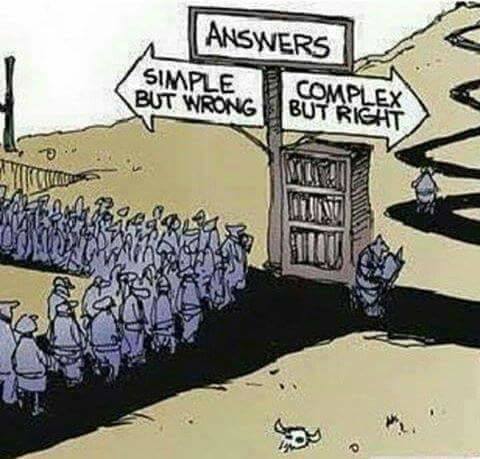
In politics, elections are only meaningful if the people have access to information4; knowledge enables people to be politically active5,6, else, it is just an empty activity. Misinformation damages democracy6. It is a matter of good governance that Governments collect data and base policies on evidence. As the world is complex, all of us require experts and specialists with deep understanding of their fields, else we are fooled by simple-seeming but wrong advice. And finally, after collecting information and understanding it (so that it becomes knowledge), we finally need to develop wisdom. To employ and use knowledge, we need to be aware of common thinking errors, and how to avoid them7.
- To Act Morally or With Free Will, You First Need Knowledge
- Politics
- Sexual Consent Requires Understanding of Consequences (Hence: the Age of Consent)
- Subjectivism and Phenomenology: Is Objective Truth Obtainable?
- What is Science and the Scientific Method?
- Errors in Thinking: Cognitive Errors, Wishful Thinking and Sacred Truths
- Links
1. To Act Morally or With Free Will, You First Need Knowledge
#ethics #free_will #freewill #humanism #morality #morals
If you don't understand the issues and can't comprehend the consequences, then, there is no true meaning in whatever course of action you choose to take. It is so important to have knowledge of a subject before deciding to act that Aristotle in 350BCE said that "ignorance" is a cause of involuntary actions (alongside 'compulsion')2. Therefore, argued Aristotle, it is voluntary and informed decisions that attract praise or blame2. The requirement for extended deliberation over moral choices was also raised by Immanuel Kant in the 18th century, who worried that "morals themselves are liable to all sorts of corruption" and it is easy to get lost, and allow biases and subconscious subjective desires to influence our decisions8. In other words, to really act morally requires a lot of thought and attention. Sometimes it requires education, sometimes it requires experience of others' lives9. History has shown that any attempt to enforce ethics based on simple elements of doctrine tend to backfire - the world's religions are mired in the shadows of such attempts. The basis of Humanism and other non-religious naturalistic ethics is in the encouragement of people to devote time to working out what the best ways of behaving are, but without stipulating any particular rules of behaviour. The only exception to this subjective and cultural maze is the absolute nature of human rights, which have been worked-out by scores of dedicated moralists in order to arrive at very basic concepts which it is always wrong to deny. In short, freewill requires knowledge and the mere fact of 'having a choice' is not enough of a basis on which to judge.
For more, see:
2. Politics
2.1. Elections are Only Legitimate if the Populace Has Access to Reasonably Unbiased Information
#elections #good_governance #information #misinformation #politics #public_debate #public_sphere #USA #voting
Meaningful elections and political involvement requires that the people have access to information; knowledge enables people to be politically active in a wise and sensible manner5,6. Some consider access to unbiased information to be a fundamental right akin to free speech10 but across the world, poor-quality information and misinformation is damaging the ability of populations to factually debate political and social issues6 especially in non-democratic countries and the USA.
Citizens must have open access to the information that informs the political process, to the reports that government read, to independent evaluations of government plans, to economic and social data, to governmental financial expenditures, to policy statements and to a wide range of other information. Governments must inform and debate with their citizens, to try to convince them of their plans rather than simply assert their value11. Not only that, but governments themselves - in power, and opposition parties - need that same neutral data to create policy12.
Political representatives can only be held to account if the public are properly informed about their actions6, including seeing what policies they have supported (via votes or otherwise) or opposed in government.
For more, see:
2.2. Leaders Must Use Experts (a Lesson from the Enlightenment)
#democracy #good_governance #rationalism #science #Scientific_Method #The_Enlightenment
The Enlightenment brought to the fore the advantages of basing policies on evidence and a solid intellectual framework13: No longer were the pronouncements of forceful leaders enough; from then on, rulers must prove their case through convincing arguments based on facts and figures. This rationalist approach popularized the Scientific Method14, and the requirement for knowledgeable experts to stand alongside politicians and rulers. The German philosopher Immanuel Kant (1724-1804) described Enlightenment demands on government as being "the enthronement of reason in public affairs"15.
As rulers are prone to abuse their position for their own ends, power must be subject to checks and balances16. And to end the cyclic spectre of prejudiced sectarian government and religious division, government must be secular and tolerant - that is - neutral, on the topic of religion17. These threads all merged to form the liberal democracy that has proven itself as the best approach to statecraft we as a species has so far devised.
For more, see:
2.3. Governments Must Use a Rationalist Evidence-Based Approach
#good_governance #politics #specialists #UK
The world is complex, and many popular opinions (and slogans) are simply wrong18. The solution, even if unpopular, is to enable educated specialists to speak freely, to advise government, and to be listened to by the appropriate government departments. It is very poor management indeed to ignore and put-down expert opinion, especially as the public can be easily swayed into an anti-specialist sentiment, on account of the often counter-intuitive nature of informed facts.
The philosopher Immanuel Kant spoke of the advantages of developing expertise over a long period of time, and conversely warns that failure to do so "only produces bunglers"19 - a generalist with a bit of knowledge is no match for someone who has devoted years of effort to a topic. In H, Kohn's description of the 'democratic way of life', this falls under the category of 'open minded critical enquiry'20. In an era where politics is being pulled away from depth analysis, David Nutt, a scientific advisor to the UK government, had to speak out for basic science, saying that being "willing to change our minds in the light of new evidence is essential to rational policy-making"21, a truism that the developed world has long since assumed to be a part of liberal democracy, but is today increasingly being trumped by popularist parties, with politicians desperate to find support even in poorly-thought-out policies which don't have proper evidenced support. Some of the lessons of the Enlightenment need to be relearned.
Schumpeter discusses this around the context of economics and crime. Our technical ability to describe and predict world economies by 1910 had become "much more correct although less simple and sweeping" and has moved away "from that happy stage in which all problems, methods and results could be made accessible to every educated person without special training"22. And the same with crime - our instincts and feelings alone lead to bad policy.
“Government and parliament will have to accept the specialists' advice whatever they may think themselves. For crime is a complex phenomenon. [...] Popular slogans about it are almost invariably wrong. And a rational treatment of it requires that legislation in this matter should be protected from both the fits of vindictiveness and the fits of sentimentality in which the laymen in the government and in the parliament are alternatingly prone to indulge.”
"Capitalism, Socialism, and Democracy" by Joseph A. Schumpeter (1942)18
For more, see:
2.4. Which Countries are Most Modern, With the Best Education and Internet Access?
#education #human_rights #modernity #technology #the_internet
| Modernity & Learning (2025)23 | ||
|---|---|---|
| Pos. | Lower is better Avg Rank23 | |
| 1 | Finland | 6.1 |
| 2 | Iceland | 8.1 |
| 3 | Denmark | 8.8 |
| 4 | Sweden | 10.4 |
| 5 | Norway | 11.1 |
| 6 | Switzerland | 11.2 |
| 7 | Belgium | 11.4 |
| 8 | Germany | 12.8 |
| 9 | Netherlands | 13.1 |
| 10 | Austria | 14.0 |
| 11 | New Zealand | 18.2 |
| 12 | Czechia | 19.7 |
| 13 | Luxembourg | 20.8 |
| 14 | France | 21.1 |
| 15 | Spain | 22.2 |
| 16 | Estonia | 22.3 |
| 17 | Hungary | 23.4 |
| 18 | S. Korea | 23.5 |
| 19 | Slovenia | 24.8 |
| 20 | Taiwan | 25.4 |
| q=197. | ||
“Education, at all levels and ages, is the single most vital support for equality as well as being a country's most vital economic and social resource. [...] Every successful aspirant to modernisation and economic development, from Japan to South Korea, China to Chile, has got there with a big emphasis on education.”
Bill Emmott (2017)26
Modernity gives us education, good health, stable lives governed by fair practices and the rule of law, human rights27, technology and societal organisation which facilitates people working-together and helping each other.
27 datasets are used to calculate points for each country, including multiple decades of data on Research and Development, Intellectual Endeavours, metric system adoption rate, Religiosity, IQ, Secondary Education, Length of Schooling, Maths, Science & Reading, the percent of citizens with access to the internet, Freedom On The Internet, IT Security, IPv6 Uptake and digital quality of life. The regions with the best average results per country are Scandinavia, Baltic States and Europe24, whereas the worst are Melanesia, Africa and Micronesia24.
For more, see:
- "Which Countries are Most Modern, With the Best Education and Internet Access?" by Vexen Crabtree (2025).
3. Sexual Consent Requires Understanding of Consequences (Hence: the Age of Consent)
#afghanistan #arranged_marriages #divorce #family #gypsies #love #marriage #religion #romance #sexuality
“Marriage shall be entered into only with the free and full consent of the intending spouses.”
The Universal Declaration of Human Rights Article 16.2
For more, see:
4. Subjectivism and Phenomenology: Is Objective Truth Obtainable?
#epistemology #knowledge #perception #philosophy #solipsism #subjectivism
Subjectivism is a problem of epistemology (theory of knowledge). The word describes the fact that we can only understand the world through our own senses and our own rational deliberations, in conjunction with our own limited experience in life. Our brains are imperfect organic machines, not a mystical repository of truth. Our senses are imperfect, our point of view limited, and the reality we experience is never the total picture. Our divergent contexts result in each of us interpreting, understanding and perceiving the world differently to one another even when looking at the same stimulus. Human thought is infused with systematic thinking errors. Our knowledge of absolute reality is hampered by our limited insights and imperfect brains, and we can never truly escape from the shackles of our own minds. Our total take on reality is a mix of guesses and patchwork. These problems have been debated by the most ancient philosophers, thousands of years ago, and no practical answers have yet been forthcoming.29.
Everyone experiences a different reality and there is no way to reconcile the experiences of two different people. Our internal worlds are unverified. No knowledge is absolute. To accept this doubt behind every theory and fact is the scientific way - evidence and logic must back up theories, but theories are never irrefutably proven, they always remain not-yet-disproven. The psychologist William James wrote that many interpretations of reality are arrived at because people find them nicer or better for themselves:
“The obvious outcome of our total experience is that the world can be handled according to many systems of ideas, and is so handled by different men, and will each time give some characteristic kind of profit, for which he cares, to the handler, while at the same time some other kind of profit has to be omitted or postponed.”
"The Varieties of Religious Experience"
William James (1902)30
The result of all this fog is subjectivism, the realisation that our realities as we experience them are completely tied up with personal experience and personal mental traits. Any attempts to learn "absolute" truths will fail, simply because our Human brains are not equipped to deal with reality in an objective way.
For more, see:
5. What is Science and the Scientific Method?
#epistemology #knowledge #science #truth
Science is an attempt to understand the natural world. The "Scientific Method" is a set of steps taken to ensure that conclusions are reached sensibly, experiments designed carefully, data is interpreted in accordance with the results of tests, and that procedures can be verified independently. The system is designed to reduce as much Human error and bias as possible31. Ideas and theories must be subject to criticism, and counter-evidence must be taken into account in order to produce new and more accurate theories32. Everything should be questioned. Most people cannot "do" science and do not have the skills to analyse data in an adequate manner33. The Scientific Method is hard and demanding, with high standards of ethical conduct expected - Daniel C. Dennett wrote that "good intentions and inspiration are simply not enough" (2007)34. The effects of science can impact on all human development, changing entire societies35. Science has been responsible for a staggering increase in human knowledge, human technology and human capabilities over the last few centuries.36
For more, see:
6. Errors in Thinking: Cognitive Errors, Wishful Thinking and Sacred Truths
- Cognitive and Internal Errors
- Pareidolia: Seeing Patterns That Aren't There
- Selection Bias and Confirmation Bias
- The Forer (or Barnum) Effect
- Wishful Thinking
- Blinded by the Small Picture
- We Dislike Changing Our Minds: Status Quo Bias and Cognitive Dissonance
- Physiological Causes of Strange Experiences
- Emotions: The Secret and Honest Banes of Rationalism
- Mirrors That We Thought Were Windows
- Social Errors
- The False and Conflicting Experiences of Mankind
- Commentaries
- The Prevention of Errors: Science and Skepticism
