The Importance of Current Events is Amplified by our Egos
https://www.humantruth.info/current_events_ego.html
By Vexen Crabtree 2005
- Current Events and the Ego
- Cataclysm and Chaos is Always on the Horizon
- The Demise of the European Union
- The Truth
- Links
1. Current Events and the Ego
#current_events #daily_mail #ego #mass_media #media #newspapers #paranoia #psychology #sociology #the_sun #thinking_errors #UK #uk_newspapers #western_culture
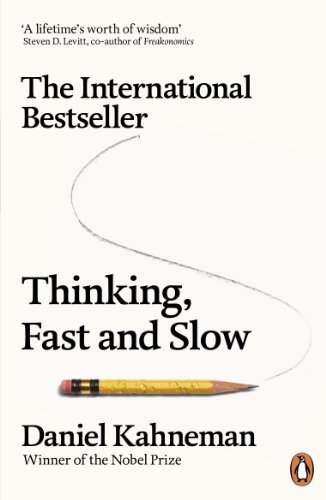 “Nothing in life is as important as you think it is when you are thinking about it.”
"Thinking, Fast and Slow"
Daniel Kahneman (2011)1
People mostly think that the times in which they live are more important than any other time. People have been doing this for quite some time. The first century Jewish historian Josephus bemoaned this aspect of Human nature two thousand years ago2 and since then our egos show no sign of letting us be more objective. Our egos make current events in the world around us seem more significant and cataclysmic than at any time in history. The scientist Lawrence Krauss3 states that "we are hardwired to think that everything that happens to us is significant and meaningful"4. We are, after all, at the centre of our own little universes.
“Remember that people take more interest in their own affairs than in anything else which you can name.”
"Routledges Manual of Etiquette"
George Routledge (1860)5
Academics fall foul of this as much, and probably even more, than the layperson. For example, the sociologist Peter B. Clarke says that "the present age might well be described as an axial age" due to the scope and importance of changes in the current era6. Four sociologists from the Open University staff describe the "contemporary UK" as "a society which appears to almost everyone who lives in it to be in the throes of change"7.
I have never read a historian or social commentator say that they are living through times which are routine. Those who lived through the industrial revolution reported that Humanity was going through its most significant and disastrous change. But now, it is history. It is nothing compared to the telecommunications revolution of the present. Changes which are affecting us in our living lives seem much more important to us than the changes of the past. Once change has passed we no longer experience its importance. It becomes abstract. Changes that affect our own lives are made by our hungry egos into things that must be important for everyone. But future generations will wonder why on Earth we were all so hot under the collar: they will know that their generation lives in the most precarious and important of human times.
Downmarket media publications reflect - and exaggerate - many of the fears of society. News outlets have dropped most fact-checking and critical analysis steps in order to churn out news more cheaply and quicker and as a result daft and untrue stories are appearing in mainstream news8,9. There are virtually no checks or quality control mechanisms that newspapers have to adhere to, and, occasional outrages against press misbehaviour are quickly forgotten by paying customers. The purpose of it all is (1) sell more newspapers, or (2) influence public opinion. People are all too willing to believe exaggerated claims. People want their lives to be part of historical drama. The millennium bug, worldwide pandemics, moral panics and fear that society is going wrong all betray humankind's neophobic reactions to progress and change. Newspaper editors pick on this fear and concoct alarmist stories from everyday events and statistics; for example they publish alarmist articles on dangers from mobile phone masts even though there are none, and there are almost no good-news stories about children despite massively improved circumstances10. Many editors and media owners have explained the usefulness of fear-mongering and sensationalism - it certainly sells more copy than balanced news. Fears become amplified and made more real by their appearance in headlines, creating a hysteria about a topic whereas in reality things are much more mundane and acceptable11. Professional broadcaster Fraser McAlpine says "news outlets are behaving like spoof sites, and they're making spoof sites look like sensible news" and people are finding it harder to tell the difference12. Modern newspapers and news outlets are producing low quality, misleading and untrue stories because they are driven by consumers who prefer entertainment, gloom and outrage rather than serious text of reasonable reading. Some news outlets remain high quality, with good fact-checking and little clickbait; but the modern era in which quantity-of-page-views is more important than reputation means that quality appears to be permanently lost from popular outlets. Always remember that after thousands of hyped-up press warnings, on midnight of the 31st of December 1999, nothing happened.13
2. Cataclysm and Chaos is Always on the Horizon
#christianity #current_events #don't_panic #ego #end_of_the_world #psychology
It is very common for our egos to convince us that now, around us, are unfolding changes which are more important than those of any other time. We think that we are witness to the ultimate decline of Human society and that brooding and significant upset awaits on the horizon. It seems to be a universal, negative human apprehension that we think we have noticed this coming catastrophe even while many others carry on regardless.
“[The] media emphasizes the negative and pessimistic side of events and therefore creates perceptual crises of faith where no real crises exists.”
"Global Trends 2005" by Michael J. Mazarr11
Professional sociologists have provided us with a long history of dire warnings. Ordinary folk also perceive that their own areas of interest are going through especially tumultuous times. For example, the children's worker Johann Christoph Arnold (2014)14 says "Teaching has probably never been as difficult as it is now. [...] We live in difficult times and many people have lost their joy in life. [We witness many] gloomy statistics and dire warnings for the future of our society and its children"15.
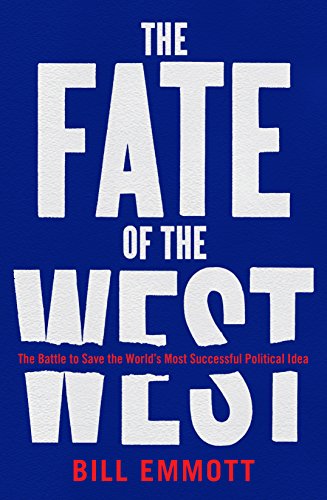 Here are some more warnings, working backwards in time from the present. Bill Emmott in "The Fate of the West" (2017)16 says we are going through times of pessimism and disintegration of alliances. Before him, Alvin Toffler, an "influential political and cultural theorist... saw the 1980s and 1990s as a period of immense and cataclysmic change"17. A few decades earlier, the great economist Joseph A. Schumpeter18 warned at length about the collapse of capitalism as a result of its insurmountable issues:
“The present generation of economists has witnessed not only a world-wide depression of unusual severity and duration but also a subsequent period of halting and unsatisfactory recovery.”
"Capitalism, Socialism, and Democracy" by Joseph A. Schumpeter (1942)19
Historian and public intellectual Gerald Heard thought the same about general humanity. He wrote:
“No one can look at civilization to-day without the liveliest concern. That is a truism - a truism so painfully obvious that we have ceased to be able to respond to it. We turn impatiently away - away to our pleasures or our preoccupations, our amusements or our causes.”
"The Third Morality" by Gerald Heard (1937)20
Publishing in 1918 and 1923, Oswald Spengler's The Decline of the West stated that European-American culture is now due to slip into decline and, ultimately, to be replaced21. Although all such warnings do eventually come true, because no civilisation lasts forever, it seems that the concentration on current problems makes it hard to see the sources of resourceful adaption and survival, which it seems, cause consistently unpredictable resilience22 in Human cultures. One hundred years later, we're all still here.
And so back in history it continues. As long as we have written about current events, we have written that things are worse than ever. The ancient Dao De Jing is traditionally said to be authored by Lao Zi. He was convinced that civilisation itself was a mistake, which had diverted people from the Dao (true way) and people had become unethical as a result. "Laozi looked back to a Golden Age of agrarian simplicity, when people lived in small villages with no technology, no art or culture, and no war". The solution to the problems of Lao Zi's time was, he argued, to abandon the goal-directed ethos of civilisation, and therefore find The Way, and rediscover how things ought to be. Needless to say, not many sociologists have gone that far in their warnings against modern society.23
“This is the most important time in history. Now I imagine that every generation before ours would say that [...] but this time it is really true, ok, honest! Now - it really is.”
Jonathan Foley (2012)24
For more:
"The End of the World is Nigh! The Dangers of Apocalyptism and End-Times Beliefs" by Vexen Crabtree (2014)
End-of-the-world-mania is dependent upon certain properties of human ego. We want to witness important historical times, and we want to be at the fore and center of tumultuous and attention-grabbing events. There have been thousands of end-of-the-world predictions. They have been the products of many great minds and have had many devoted believers from various religions and cults. For example in Christian England alone, during the reformation, "eighty books were published on the subject of the world's end"25. All have put a lot of time and effort in to each and every prediction, building up supporting evidence from religious texts, historical trends and numerology. What do all these predictions have in common about the end of the world? They have all been wrong. Those promoting these fears, and those subject to them, are all in the grips of their own ego!
3. The Demise of the European Union
#don't_panic #EU #europe #politics
Taken From:
"The EU is Always in Deep Crisis: Decades of Warnings" by Vexen Crabtree (2018)
To say that "the question of the EU's long-term survival has frequently been raised"26 is a mild way of phrasing it: Every decade has seen a series of doom-laden prophesies from academics and professionals of every calibre, declaring that the project towards institutional European integration is at the end of its life. "Many expected the dissolution of the EC in the 1970s and there was much guesswork as to who would leave first"27. In the 1980s, academics "warned about the possible disintegration of the EEC and even leading members of EC institutions openly spoke of the dismal state that Europe was in. [In] 1982, the president of the European Parliament compared the Community to a 'feeble cardiac patient whose condition is so poor that he cannot even be disturbed by a birthday party'"28. After that dismal diatribe, the pronouncements continued throughout the 1980s, 1990s and 2000s. In 2005 the veteran politician Jean-Claude Juncker said "the EU is not in crises: it is in deep crisis"29. From 2016, Brexit is said to be the latest cause of the imminent disintegration of the EU30,31 amongst other reasons31. A 2017 book The European Union in Crisis32 states that the death-tolls have been sounded so frequently that many people under-estimate the seriousness of the current crises - which is, yet again, the most serious yet33. The EU is always in crises, just like crime is always getting worse, immigrants more dastardly, the weather deteriorating and employment evaporating34.
In reality the psychological effects of the ego, placing oneself at the centre of a cataclysm where the (perceived) most important events are occurring, is the cause of the EU crises.
4. The Truth
4.1. Everything is Better Than You Think
#don't_panic #end_of_the_world #hope #humanity #neophobia #the_future #western_culture
Popular culture is worse than it ever has been. The education system is following it into disordered inadequacy. Unemployment is undermining society and perhaps as a result, crime rates are getting scary. Immigration is out of control. It is going to be like the fall of the Roman Empire, with weak government no longer in touch with the lives of the citizenry. The European Union is on the verge of collapse35, and, the Internet era is eroding our ability to form friendships. Youths are not being brought up properly - computer games and the TV are increasingly violent and graphic: films are now nearly all shallow and simple. Social commentator Daniel Goleman warns we now face a "collective emotional crisis" resulting in worsening social dysfunction36. Global warming and the global economy have created insurmountable problems. All of us, in our lives, are going to face chaos and witness the mass failure of morality and decency. The young no longer respect the old. Jobs and marriages are no longer for life. Did I mention the crime rates?
This, with a few variant details, is what they will think in the 2020s, because they also thought it in the 2010s and 2000s. The 1980s was a decade obsessed with the rising power of computers - they'd turn against us soon, for sure. And recessions were seemingly endless - the anarchists were winning. But perhaps they were right in the 1960s where they warned that mass immorality and liberality would destroy civilisation - if we survived nuclear war, that is. Still further back, those same feelings were echoed in the Industrial revolution, at the end of the era of Empires and at the foundation of global shipping which heralded unheard-of immigration and globalisation (hundreds of years ago). As mankind moved into cities, or into towns, the outcry against the changes in morality and customs was as loud as it was paranoid. In the 1st century CE, the Roman philosopher Seneca reassured us that the vices of mankind, including "contempt for morality... are the defects of humankind, not of the times. No era has ever been free from blame" and that "everyone reproves his own age"37. 2,000 years later, and we're still at it! However do we survive?
Luckily for us, it seems that the more people predict chaos, uncertainty, cataclysms and the end of the world as we know it, the less likely it is to actually happen. Crime rates are falling, large scale wars have apparently ceased to occur, worldwide extreme poverty has radically decreased38,39,40, literacy has been rising for hundreds of years, and technology and medical science are making astounding strides in preventing diseases (many of which are now gone for good). Jobs and marriages may not be for life, but we are living twice as long. Absolutely nothing is as bad as people say. The press thrive on bad news. Our egos trick us into thinking we are living in the most important times during our own lives. We're not. Those times are yet to come. The end is yet to come. Just remember to take a leaf from the British: Keep Calm, and Drink Tea.
For more, see:
4.2. The Gradual Decline of Violence
#crime #democratic #don't_panic #human_rights #peace #violence
We are slowly getting more peaceful as a species41. Although over the past 15 years there have been decreases in 75 countries, 86 became more peaceful42. In the long term, the overall trend is that humanity is getting less violent43,44. Most people are feeling this effect, with 75% of people globally feeling safer in 2021 than five years before42. Deaths from conflict between humans have been decreasing over the millennia; legal systems and centrally organized states have been effectively reducing interpersonal conflict. In modern times, the best places at doing this are highly democratic, comitted to human rights, and interlinked with their neighbours economically and culturally.
“[Today] you will read about a shocking act of violence. Somewhere in the world there will be a terrorist bombing, a senseless murder, a bloody insurrection. It's impossible to learn about these catastrophes without thinking, "What is the world coming to?". Believe it or not, the world of the past was much worse. Violence has been in decline for thousands of years, and today we may be living in the most peaceable era in the existence of our species.”
Steven Pinker (2011), Wall Street Journal43
For more, see: